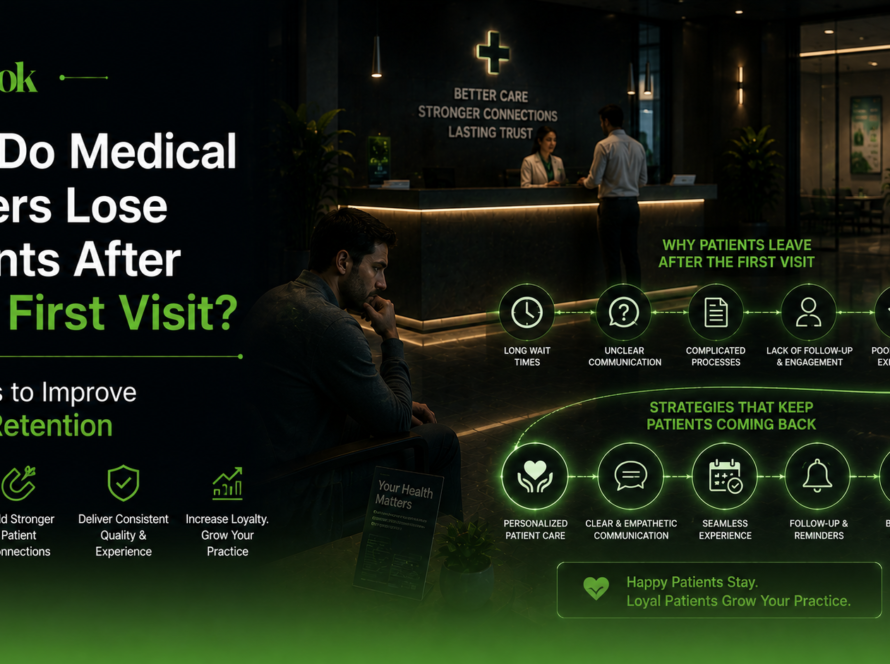
When medical center owners think about increasing profits, they often focus on attracting more patients or increasing marketing budgets.
However, another significant opportunity exists:
Improving operations.
Many medical centers lose revenue every day due to operational inefficiencies that affect productivity, patient experience, and profitability.
These losses are often hidden but can have a major impact on performance.
What Is Operational Waste?
Operational waste refers to activities that consume time and resources without adding value to patients or the organization.
Examples include:
- Repetitive tasks
- Delayed processes
- Poor communication
- Inefficient workload distribution
- Data entry errors
- Appointment delays
How Operational Waste Affects Medical Centers
Lower Productivity
Teams spend unnecessary time on avoidable tasks.
Increased Employee Stress
Disorganized systems create pressure even when workloads are manageable.
Poor Patient Experience
Delays and confusion negatively impact satisfaction.
Reduced Profitability
Waste increases costs without generating additional value.
Signs of Operational Problems
Constant Reception Congestion
Despite manageable patient volumes.
Frequent Delay Complaints
Related to appointments or processes.
Dependence on Key Individuals
Operations suffer when one person is absent.
Unclear Responsibilities
Leading to overlapping tasks.
How to Improve Medical Center Operations
1. Document Standard Procedures
SOPs help:
- Standardize performance
- Reduce errors
- Simplify onboarding
2. Clarify Roles and Responsibilities
Every employee should understand:
- Their tasks
- Their responsibilities
- Their KPIs
3. Improve Cross-Department Communication
Better coordination between:
- Reception
- Call center
- Physicians
- Management
Improves efficiency and patient experience.
4. Use Data for Decision-Making
Track:
- Bookings
- Attendance rates
- Team productivity
- Call center performance
5. Review Processes Regularly
Continuous improvement helps maintain operational excellence.
How to Increase Team Efficiency
Provide Ongoing Training
Build skills and improve performance.
Eliminate Low-Value Tasks
Allow staff to focus on higher-impact activities.
Improve Workplace Structure
Clear systems reduce stress and confusion.
Connect Performance to KPIs
Employees should understand how success is measured.
Key Operational KPIs
Attendance Rate
Measures booking effectiveness.
Conversion Rate
Measures inquiry handling performance.
Average Waiting Time
Measures patient experience.
Employee Productivity
Measures resource efficiency.
Common Operational Mistakes
- Lack of documented procedures
- Reliance on individual efforts
- Ignoring performance metrics
- Overlooking patient complaints
- Delaying process improvement
Conclusion
Operational improvement is not about working harder—it is about working smarter.
By reducing waste, improving systems, and increasing team efficiency, medical centers can achieve better profitability, stronger patient experiences, and sustainable growth.
Strong operations remain one of the most important foundations for long-term success in healthcare.