Managing a medical clinic or healthcare center is no longer just about delivering quality healthcare. In today’s competitive healthcare market, success depends on operational efficiency, patient satisfaction, financial sustainability, and the ability to adapt to continuous change.
Whether you own a single-specialty clinic, a multi-specialty medical center, or are planning to expand your healthcare business, establishing strong management practices is the foundation of long-term success.
Many healthcare organizations invest heavily in experienced physicians and advanced medical equipment but still struggle with declining profits, operational chaos, or poor patient retention. In most cases, the issue isn’t clinical quality—it’s the absence of a structured management system.
This guide explores the best practices that help medical clinics and healthcare centers build efficient operations, improve patient experiences, and create a sustainable healthcare business.
What Is Medical Clinic & Healthcare Center Management?
Medical clinic management is the process of organizing, monitoring, and continuously improving every operational and administrative aspect of a healthcare organization.
Effective management goes far beyond scheduling appointments. It involves creating systems that allow every department to work together efficiently while maintaining high standards of patient care.
Successful management typically includes:
- Operational planning
- Staff management
- Patient flow optimization
- Financial management
- Performance monitoring
- Call center management
- Technology implementation
- Patient experience improvement
- Regulatory compliance
Ultimately, the goal is to create a healthcare organization that delivers outstanding care while remaining financially healthy and operationally efficient.
Why Many Medical Centers Fail Despite Having Excellent Doctors
One of the biggest misconceptions in healthcare is that hiring skilled physicians automatically guarantees business success.
While clinical excellence is essential, operational weaknesses often prevent medical centers from achieving sustainable growth.
Common management challenges include:
Lack of Standard Operating Procedures
When every employee follows a different process, service quality becomes inconsistent, errors increase, and daily operations become difficult to manage.
Standardized workflows ensure consistency regardless of who performs the task.
Poor Operational Visibility
Many clinic owners rely on intuition instead of measurable data.
Without performance dashboards and operational KPIs, it’s difficult to identify bottlenecks, revenue leaks, or inefficient processes.
Inefficient Patient Journey
Patients evaluate every interaction—not just the consultation.
Complicated booking procedures, long waiting times, poor communication, and slow follow-up significantly reduce patient satisfaction and retention.
Manual Administrative Processes
Paper records, spreadsheets, disconnected software, and repetitive administrative work consume valuable staff time while increasing the likelihood of errors.
Build Strong Operational Systems
Every successful healthcare organization is built on clearly defined operational processes.
Instead of relying on individual experience or memory, clinics should document every workflow from the patient’s first inquiry to post-treatment follow-up.
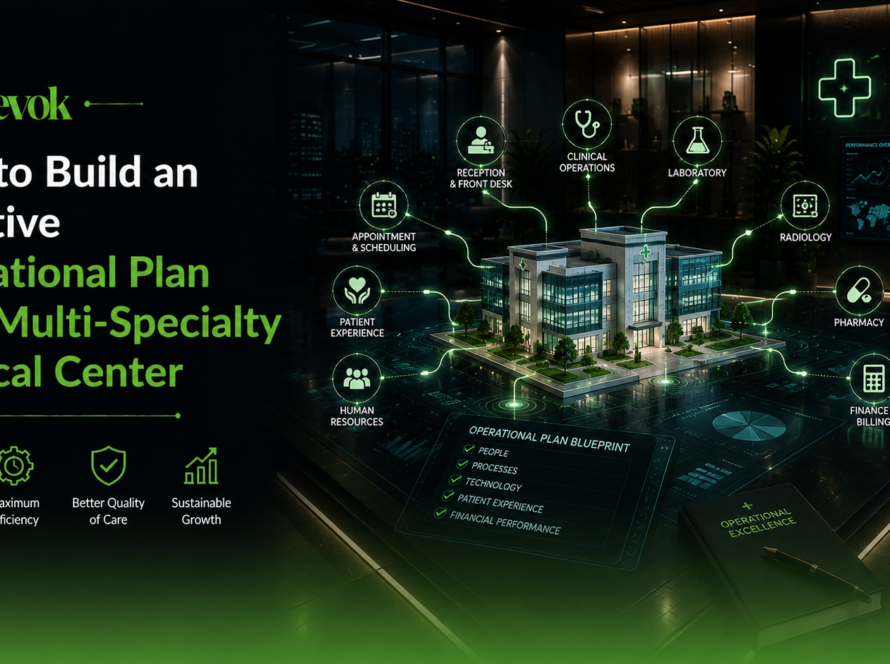
Operational systems should cover:
- Appointment scheduling
- Patient registration
- Clinical documentation
- Billing
- Insurance processing
- Laboratory coordination
- Pharmacy communication
- Follow-up procedures
Documented workflows reduce confusion, simplify staff training, and improve consistency across every department.
Focus on the Complete Patient Journey
Today’s patients expect convenience, transparency, and personalized communication.
A successful patient journey includes:
Easy Appointment Booking
Patients should be able to book appointments quickly through multiple channels, including phone calls, websites, messaging apps, or online booking systems.
Fast Check-In
Digital registration and efficient reception processes minimize waiting times and improve first impressions.
Smooth Clinical Experience
Clear communication between departments reduces delays and creates a seamless healthcare experience.
Effective Follow-Up
Automated reminders, treatment follow-ups, satisfaction surveys, and post-visit communication improve patient retention while strengthening long-term relationships.
Build a High-Performance Healthcare Team
Even the best operational systems depend on people.
Healthcare organizations should focus on building a culture of accountability, collaboration, and continuous improvement.
Key priorities include:
Hiring Beyond Technical Skills
Communication, empathy, professionalism, and adaptability are equally important when selecting employees.
Continuous Training
Healthcare regulations, technologies, and patient expectations constantly evolve.
Regular training improves productivity while maintaining consistent service quality.
Clear Responsibilities
Every employee should understand:
- Their role
- Their performance expectations
- Their reporting structure
- Their measurable objectives
Clear accountability reduces operational confusion and improves teamwork.
Improve Financial Management
Profitability isn’t only about increasing patient volume.
Healthcare organizations should actively monitor financial performance through accurate reporting and cost management.
Key financial indicators include:
- Revenue per patient
- Operating expenses
- Profit margin
- Collection rates
- Service profitability
- Resource utilization
Regular financial analysis allows managers to identify opportunities for growth while controlling unnecessary expenses.
Measure What Matters
Modern healthcare management relies on data rather than assumptions.
Some of the most important KPIs every healthcare center should monitor include:
- New patient acquisition
- Appointment utilization rate
- No-show percentage
- Cancellation rate
- Patient retention rate
- Average waiting time
- Revenue per physician
- Revenue per specialty
- Patient satisfaction score
- Staff productivity
- Conversion rate from inquiries to appointments
Tracking these indicators allows management to make informed decisions based on real operational performance.
Embrace Digital Transformation
Healthcare technology has become a competitive advantage rather than a luxury.
Modern Clinic Management Systems (CMS) simplify operations by integrating multiple departments into one centralized platform.
Digital transformation typically includes:
- Electronic Medical Records (EMR)
- Online appointment scheduling
- Billing automation
- Inventory management
- Staff scheduling
- Financial reporting
- CRM integration
- Call center management
- Performance dashboards
These solutions reduce administrative work, improve communication, and increase operational efficiency across the organization.
Strengthen Your Call Center Operations
For many patients, the first interaction with your medical center happens over the phone.
An ineffective call center can result in lost appointments, frustrated patients, and declining revenue.
A high-performing call center should:
- Respond quickly
- Convert inquiries into appointments
- Confirm bookings
- Handle rescheduling efficiently
- Conduct follow-up calls
- Support patient retention initiatives
Every phone conversation represents an opportunity to strengthen patient trust.
Create a Culture of Continuous Improvement
Healthcare organizations should continuously evaluate and improve their operations.
Regular operational reviews help identify:
- Workflow bottlenecks
- Staff challenges
- Patient complaints
- Financial inefficiencies
- Technology gaps
- Service improvement opportunities
Organizations that continuously improve remain competitive even in rapidly changing healthcare markets.
Common Management Mistakes to Avoid
Many clinics struggle because they make avoidable operational mistakes, including:
- Operating without documented processes
- Ignoring operational data
- Delaying technology adoption
- Poor communication between departments
- Inadequate employee training
- Weak financial monitoring
- Focusing solely on marketing instead of operational excellence
Avoiding these issues creates a stronger foundation for sustainable business growth.
Best Practices for Long-Term Success
Healthcare organizations that consistently outperform competitors typically focus on several core principles:
- Build standardized operational systems.
- Prioritize patient experience at every touchpoint.
- Invest in leadership and employee development.
- Measure operational and financial performance regularly.
- Automate repetitive administrative tasks.
- Adopt integrated healthcare technology.
- Encourage collaboration across departments.
- Continuously optimize workflows based on data.
These best practices create a healthcare organization that is scalable, profitable, and prepared for future growth.
Conclusion
Managing a successful medical clinic requires much more than clinical expertise. Sustainable success depends on operational excellence, structured systems, strong leadership, financial discipline, and an outstanding patient experience.
Healthcare organizations that invest in efficient operations, embrace digital transformation, monitor performance, and continuously improve their processes are far more likely to achieve long-term profitability and patient loyalty.
Whether you’re managing an established medical center or planning your next stage of growth, building a strong management foundation is one of the smartest investments you can make.
Transform Your Healthcare Organization with Devok
At Devok, we help medical clinics and healthcare centers build efficient operational systems, improve performance, optimize patient journeys, and implement scalable business strategies that support sustainable growth. From operational planning and workflow optimization to digital transformation and healthcare business development, our solutions are designed to help healthcare organizations operate smarter, grow faster, and deliver exceptional patient experiences.